
Rendering service
Cement rendering in Sydney

Two-storey home rendered throughoutA Finishing Touch job in Sydney
- Licensed rendererNSW licence 298643C
- Two coats, then the floatOver brick, block and concrete
- Cured before paintAbout 28 days for new render
- Free quotesConfirmed in writing after a visit
- Best for
- Solid brick, concrete block and concrete walls: older brick houses, new masonry builds, front fences and retaining walls
- Suits
- Face brick, sound existing render, block and concrete. Not Hebel, polystyrene or fibre cement, which need an acrylic system
- Before paint
- Leave new render 28 days before it is coated. Dulux's AcraTex data sheets ask for that long so the alkalinity of new cement surfaces can settle.
- Dulux AcraTex Sedona technical data sheet (AUAC00056)
- Upkeep
- Wash the walls down once a year and keep garden beds and sprinklers off the render. Seal hairline cracks before water gets in, and recoat when the coating maker says to.
The short answer
What it is and when you need it
Cement render, often called sand and cement render, is a mix of sand, cement, lime and water trowelled onto masonry.
It goes on in two passes, a tight first coat that bonds to the wall and a second coat that is straightened with a long straight edge. It is then finished with a wooden, plastic or sponge float. The sponge float gives the fine sandy surface you see on most rendered houses. Once the render has cured, it is coated with paint or a texture system.
You need it when a brick or block house, extension or fence should read as one even surface instead of exposed brick. It also suits an older rendered wall that needs a new coat. It suits solid masonry because it grips the brick as the brick draws water out of it. It also builds up to straighten an uneven wall: pre-blended cement renders can go on up to 10 mm thick in one coat.
To check whether cement render suits your walls, look at what they are made of. Solid brick, concrete block and concrete all take it well. If the wall is Hebel panel, polystyrene foam or fibre cement sheet, cement render is the wrong system. Render makers such as Davco say so on their data sheets, so we would quote an acrylic system instead.
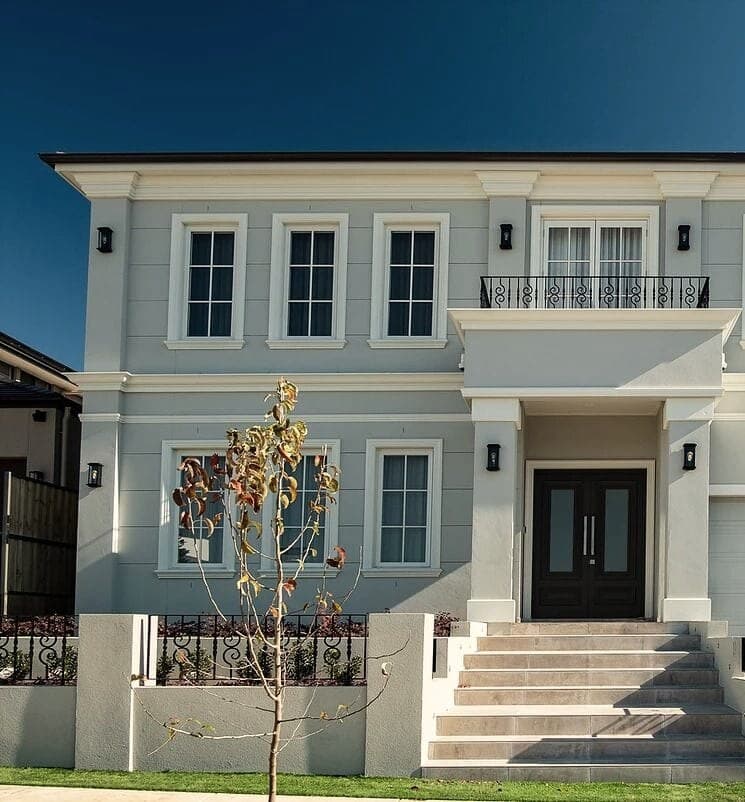
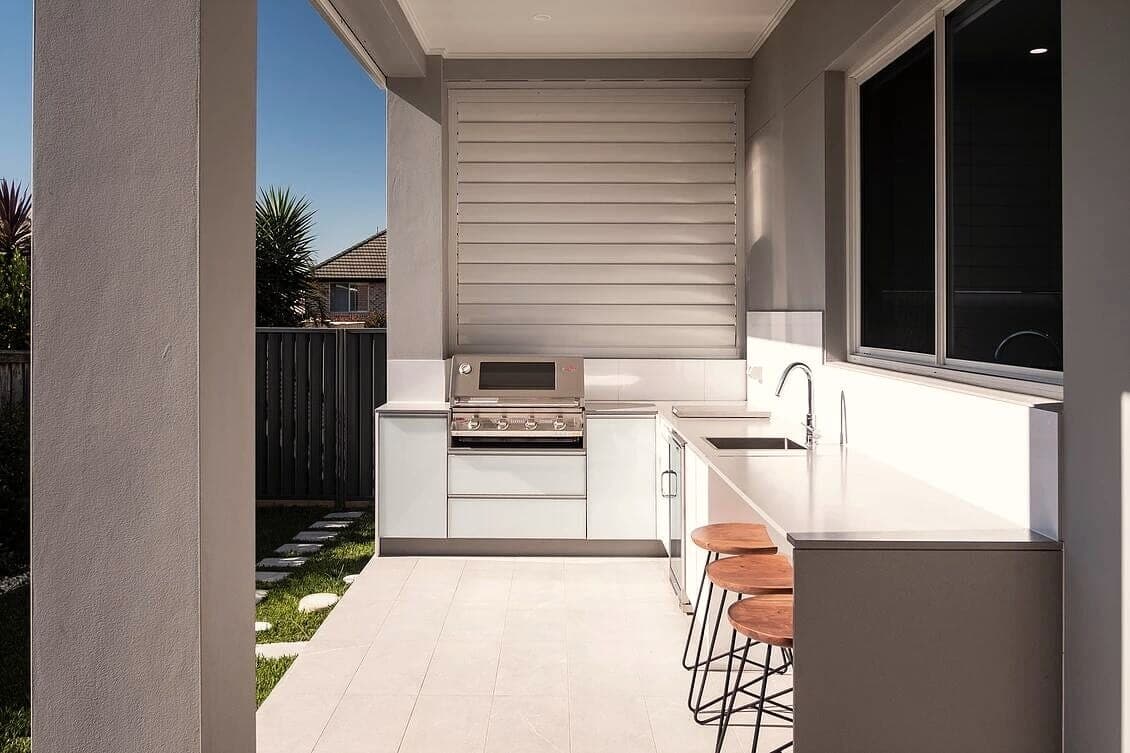
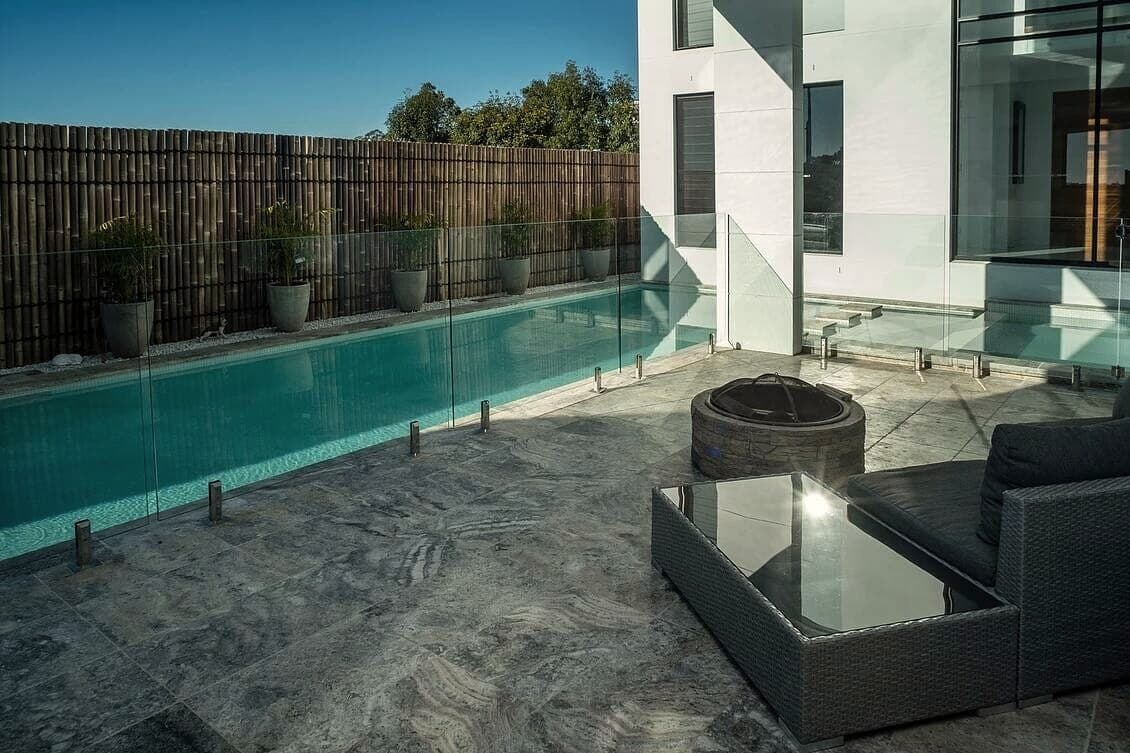
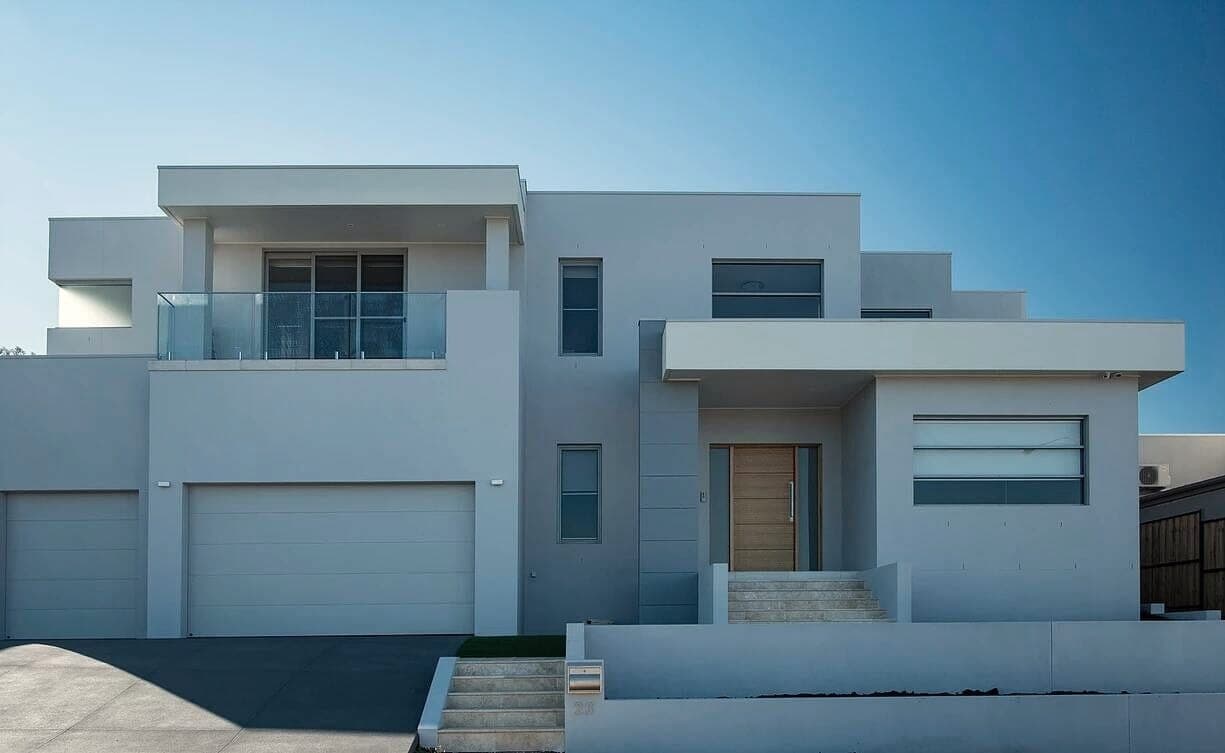
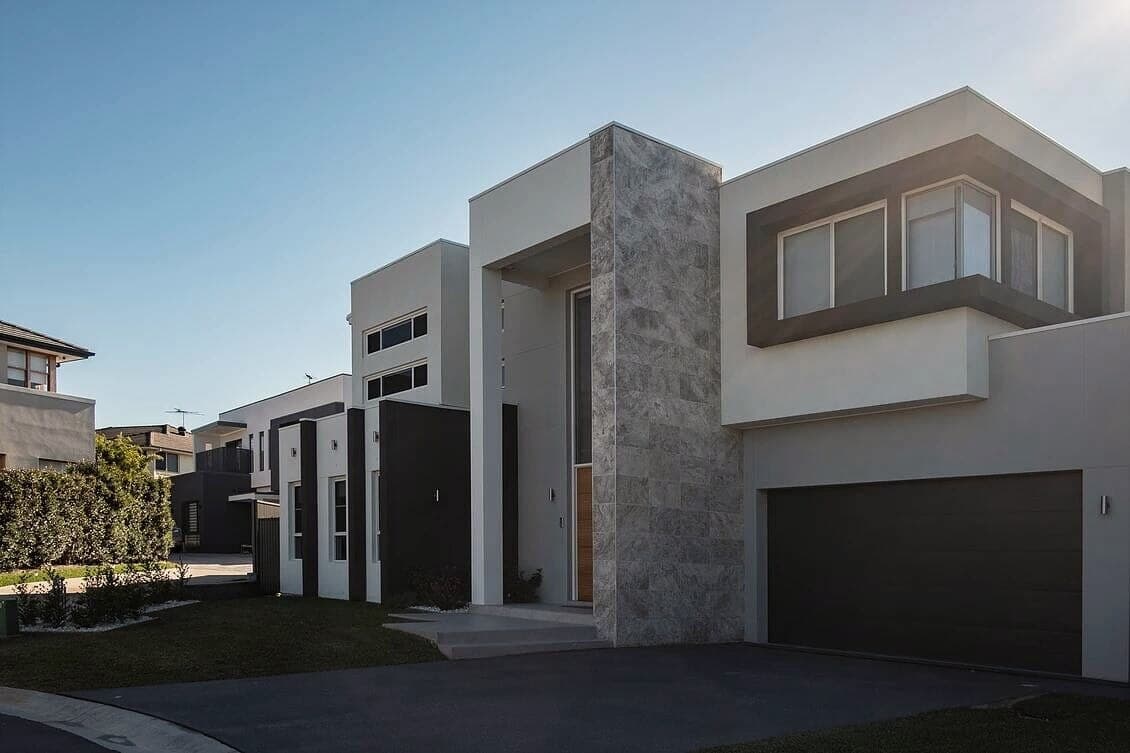
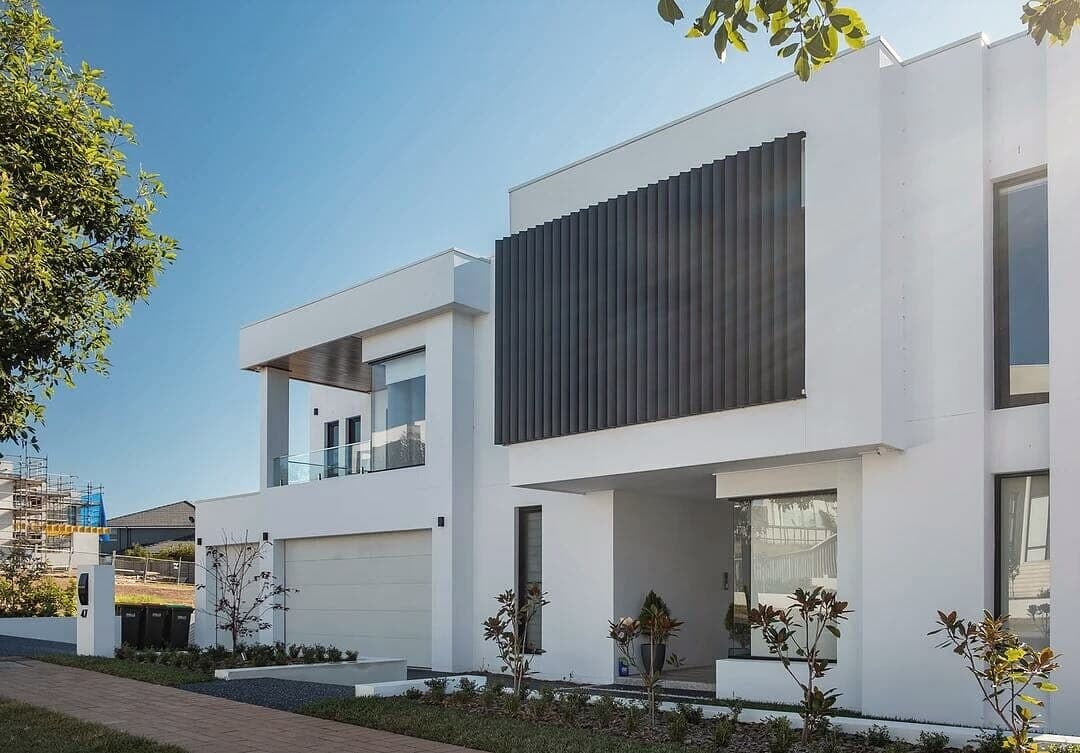
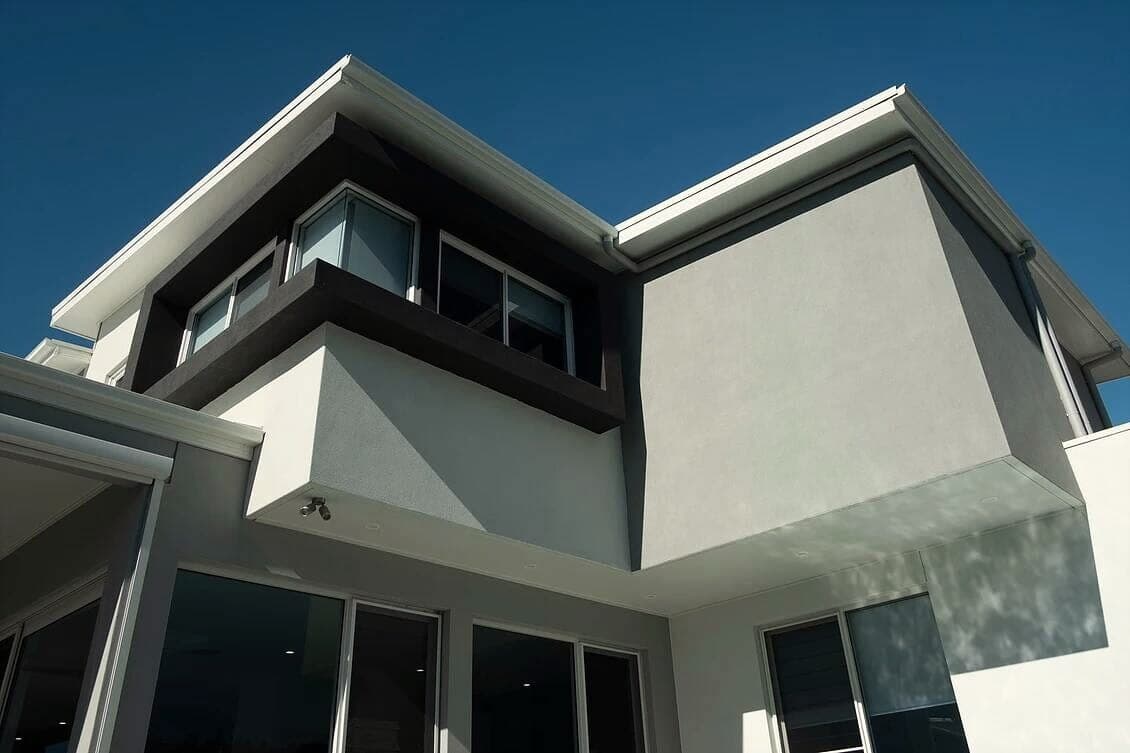
01 / 07
Built up on the wall
Two coats, then the float
Cement render goes on in two passes over a clean, dampened wall, is finished with a float, and cures before anything is painted over it.
- Day 0Render on
- First 12 hours or soKept damp while it sets
- Day 28Ready to coat
Brick or block
A sound, damp wall
Loose mortar, dirt and flaking paint come off, thirsty brick is dampened so it cannot pull the water out of the render, and mesh goes in where materials change.
First coat
Tight, to bond
A tight first coat bonds to the wall and fills it. Render grips solid masonry as the brick draws water out of it.
Levelling coat
Ruled straight
The second coat is straightened with a long straight edge so the wall reads flat in low sun. Pre-blended cement renders can go on up to 10 mm thick in one application.
Float finish
Wood, plastic or sponge
A wooden, plastic or sponge float finishes the surface. The sponge float gives the fine sandy surface you see on most rendered houses.
Coating
After about 28 days
A texture coat with a membrane topcoat bridges hairline cracks better than a thin film of paint, and goes on once the render has cured.
Questions answered
What people ask about cement rendering
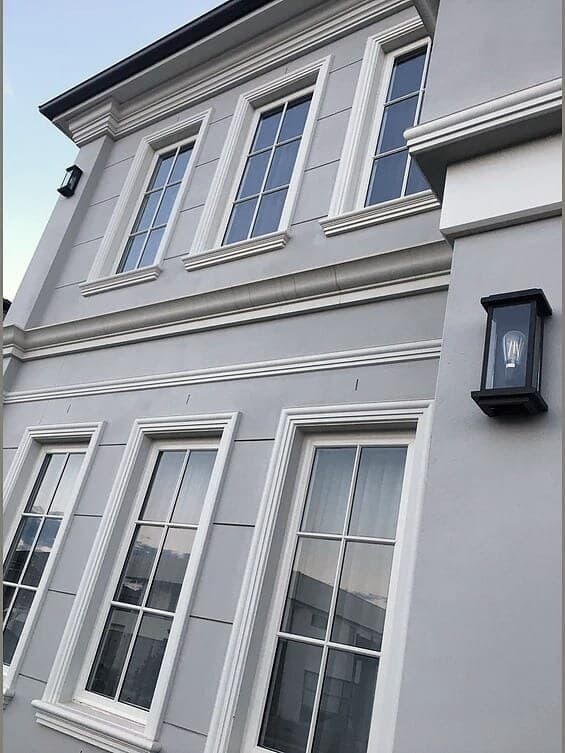
Can you render over brick?
Yes. Solid brick is what sand and cement render was made for. Before any render goes on, the brick has to be sound and clean. Anything that would stop the bond comes off first: loose or crumbling mortar, flaking paint, dirt, moss and efflorescence (the white salt bloom on some brick walls).
We check how thirsty the brick is by splashing water on it. Brick that soaks water up straight away would pull the moisture out of the render before it can set, so it is dampened first. Very dense brick or concrete may need a bonding coat. Painted brick is tested before we agree to render over it, and paint that lifts comes off first.
Where a brick wall meets a different material, such as a block extension or a concrete lintel, the two move differently. The render needs reinforcing mesh or a control joint at that change. Render also stops above the damp-proof course, the waterproof layer near the bottom of a brick wall, and the weep holes stay open so moisture can still escape.
- Cracks in the brickwork, and whether they follow the mortar joints or run through the bricks
- Damp patches or salt along the bottom of the walls
- Old paint, sealers or render that may not hold
- Where the damp-proof course and weep holes sit
- Whether the house is heritage-listed or in a heritage conservation area
How long before rendered walls can be painted?
Plan on about four weeks. Render is dry to the touch within hours, but it is still curing, and Dulux's AcraTex data sheets ask for 28 days before new cement render is coated. Some systems allow a shorter wait when a bonding additive goes into the render. If your painter or builder is working to one of those, follow that system's own data sheet.
If you are rendering before a sale or an event, count those four weeks into the timetable, and book the painter for after the cure, not straight after the render.
Why does cement render crack, and how is it prevented?
Cement render is hard and brittle, so it cracks where the wall underneath moves or where it was applied badly. The common causes are movement in the building, joints between different materials, render laid on too thick in one go, and render that dried out before it could cure.
Prevention is mostly preparation and patience. That means a clean, sound, properly dampened wall, mesh or control joints where materials change, and coats kept within the maker's thickness. Then slow curing, with the render kept damp for its first 12 hours or so. Fine hairline cracks can still appear as render ages, which is why the coating over it matters. Cracks wider than about 5 mm, or cracks that keep growing, point to movement in the building rather than the render. Our render repairs page explains what to do about those.
Can you render over existing render?
Usually, if the old render is sound. We tap the walls to find drummy patches, where render sounds hollow because it has come away from the brick. We cut those out and repair them, then render or coat over the rest.
Do I need council approval to render my house?
Usually not, unless the house is heritage-listed or in a heritage conservation area. Outside those areas, NSW planning rules let you cement render a house without council approval. The work must keep the wall's fire resistance and, on bush fire prone land, be sealed against embers. Inside them you need consent or a written exemption from the council.
4 more questions
Should cement render be coloured or painted?
The usual approach is to leave the render its natural colour and coat it once it has cured. Dulux does not recommend ordinary low-build paint over cement render, because cement render keeps hardening as it ages and can develop fine shrinkage cracks. A thicker coating, such as a texture coat with a membrane topcoat, bridges hairline cracks better than a thin film of paint.
Colour can also be mixed into the final coat. That saves a coating at the start, but a patch is much harder to blend in later, and a change of colour means coating over it anyway. NSW Fair Trading's building guide accepts that an aged render finish can be impossible to match exactly. It says repairs should stop at a joint, downpipe or corner where possible.
Do you render fences, pools and bathrooms?
Brick and block front fences, garden walls and retaining walls take cement render well. We render fences built of masonry, or of board made to be rendered; a timber or metal fence cannot be rendered directly.
We also render masonry around pools and in bathrooms, but our work there is rendering only. Waterproofing is a separate licensed trade in NSW, and we do not do it, so it needs its own waterproofer working in the right order with us.
Is sand and cement render the same as concrete rendering?
Yes. People search for concrete rendering, cement rendering and sand and cement render, and they all mean the same cement-based render. Concrete is one of the surfaces it goes over; new concrete needs at least five days to cure before it is rendered, according to Mortatec's render data sheet.
Will cement render stop damp coming through my walls?
No. Render over a damp wall traps the moisture and it comes out somewhere else, often higher up the wall or behind the render. Find and fix the source first: a bridged damp-proof course, a leaking gutter, or soil or paving built up against the wall.
Start to finish
How a cement rendering job runs
- 01
Free quote
You ask for a quote; we reply with a rough figure and any questions about the house.
- 02
Site visit
We measure, tap and check the walls for cracks, damp and old coatings, and confirm the finish with you.
In the quoteThe owner on every job
- 03
Preparation
The site is protected, the walls are cleaned and repaired, and mesh goes in where materials change.
In the quoteProtection before we start · Wall preparation
- 04
Render
Two coats go on, the second straightened and floated to the agreed finish, working with the weather and the shade.
In the quoteTwo coats of render · The finish you choose · Corners, reveals and sills
- 05
Cure and coat
The render is kept damp while it sets, the site is cleaned up, and the walls are left about 28 days before coating.
Wait28 days before coating, on Dulux’s AcraTex data sheets
Planning cement rendering?
Ask for a free quote: a rough figure first, then a visit to confirm the quote in writing.
Pricing
What changes the price
Our typical prices · Cement render
$34–$69
per m², including GST, typical $52
- The wall area, and whether the house is one storey or two (two storeys usually means scaffolding)
- Access: narrow side passages, steep blocks and walls behind gardens take longer
- The state of the brick: cracks, salt, old paint or failed render that needs work first
- How many windows, doors, corners, sills and reveals have to be formed
- The finish, and whether a texture or membrane coating is part of the job
- Heritage consent, if your house needs it, which can change when the work can start
Sydney conditions
What changes this job in Sydney
Heritage areas and face brick
In a heritage conservation area, or on a heritage-listed house, rendering face brick needs council consent, and some councils rule it out. Burwood's planning controls, for example, say cement render of existing face brick walls on heritage properties is not permitted. Check your address on the NSW Planning Portal before you plan the work.
Source: Burwood Development Control Plan
Summer heat
Davco's data sheet says its cement render must not go on above 30°C or in hot, windy weather. Large walls in full sun should be avoided or cooled down with water first. In a Sydney summer that usually means early starts and working around the house with the shade.
Source: Sika Davco Render product data sheet (September 2022)
Damp at the base of older brick walls
Many older brick houses have damp at the bottom of the walls. The Heritage Council of NSW's salt damp guide calls a band of hard cement render over the base of a damp wall a common but poor fix. The moisture rises behind it and comes out higher up. The cause gets dealt with first, and the render stops above the damp-proof course.
Source: Heritage Council of NSW, Salt attack and rising damp technical guide
Reviews
What our clients say
Courteous, tidy, protected the area from debris, cleaned up after and a good job
“Very professional and so helpful! Good communication and a fair price! Arrived nice and early! The rendering was done very well and looks great. The boys were very careful and made no mess! I have no hesitation in recommending Ali and his workers! I am definitely a very happy customer! Job: rear of house rendering plus a variety of rendering repairs in various places! Thank you so much!”
★★★★★Gregory Williams · “We loved dealing with Ali and his team. They are all lovely and really good renderers. We wanted something a little different (a thickly applied splattered style) in some parts of the house,”bagged” in other areas and smooth render in other parts…all was no problem, and expertly done. All fairly priced too. We would definitely recommend Finishing Touch Rendering. Stephanie and David.”
★★★★★Stephanie Hammond ·
Reviews from Google, shown as written.
Read every review on GoogleKeep reading
Guides, other finishes and areas
Guides
Other finishes
Free quote
Get a free cement rendering quote
Quotes are free. Quotes are free. We give you a rough estimate first, then visit to measure and check the walls before the final quote. Photos of each wall help.